Our work

Research, projects, and competitions.

Explore what we design, build, test, and launch—from aerospace research to competition-ready rockets.

NASA TechRise experimental payload and flightbox
Mechanical · Electronics · Complete

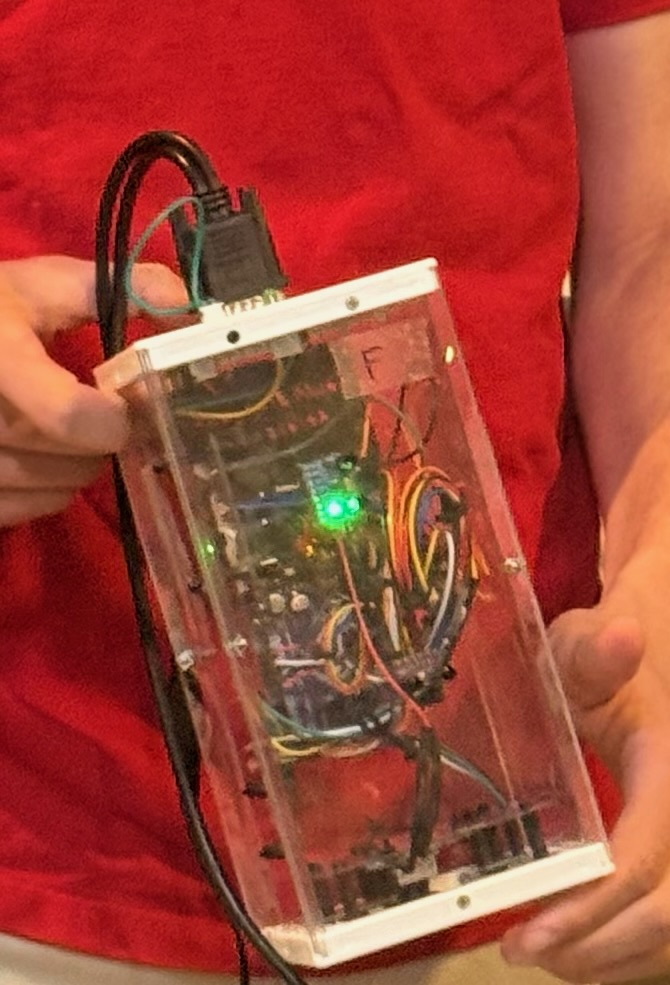
NASA TechRise experimental flightbox

Designed and built by Team A with NASA engineer mentorship, the payload collected visible and near-infrared measurements for an NDVI-mapping experiment. Its flightbox combined a multispectral sensor, GPS, IMU, pressure sensor, photodiode, and development board.

SensorsAS7343, TSL2591, BME280
ControllerMetro M4
IMUMPU-6050
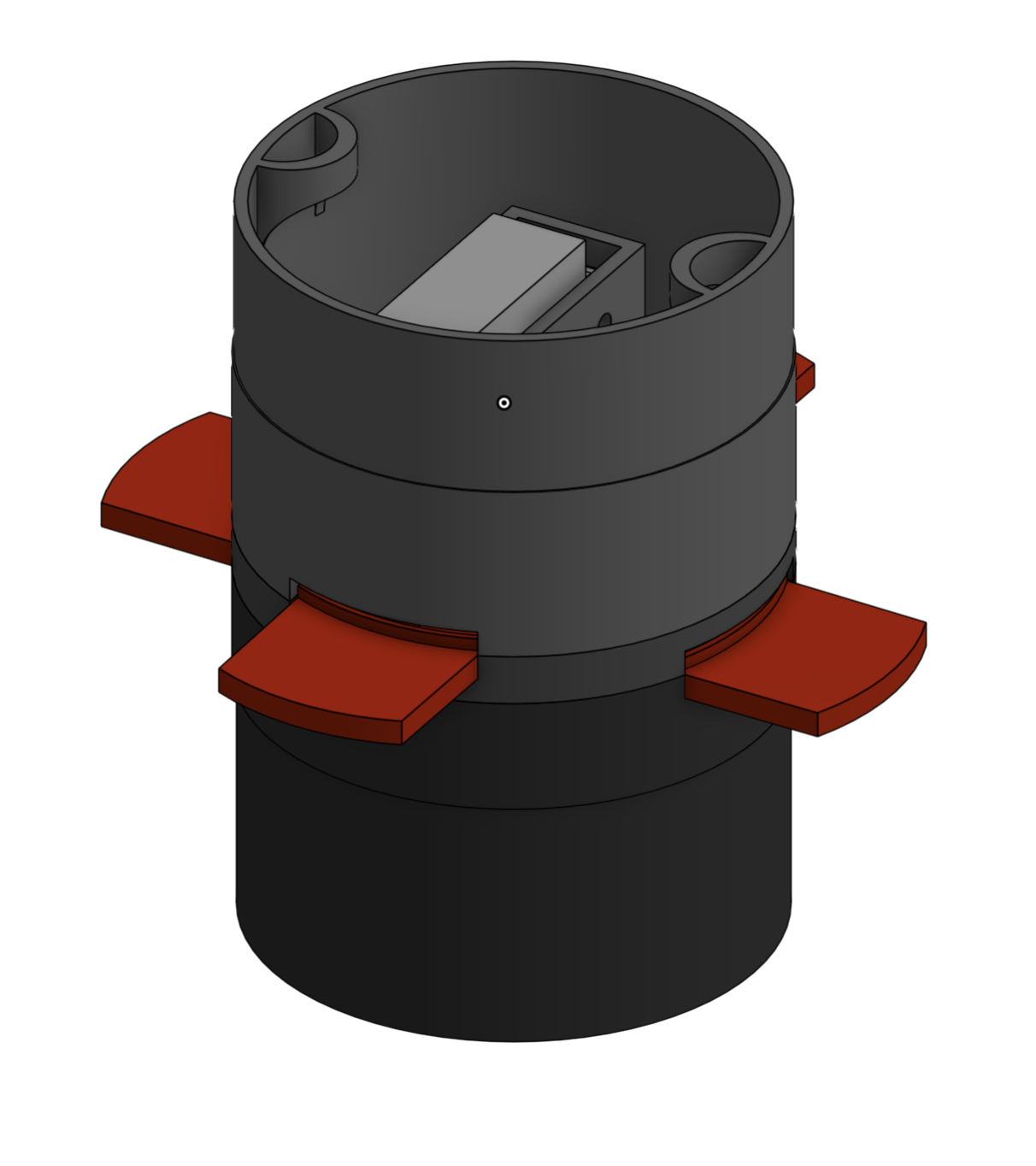
Active airbrakes engineering project
Mechanical · Electronics · In progress

Active airbrake system

Three servo-actuated flaps deploy during flight to control apogee. The system uses a PID control loop with Kalman-filtered altitude data from custom avionics.

Actuation9g servo
ControlPID + Kalman
MCUSTM32
Rocket++ rocket design
Electronics · Software · Active

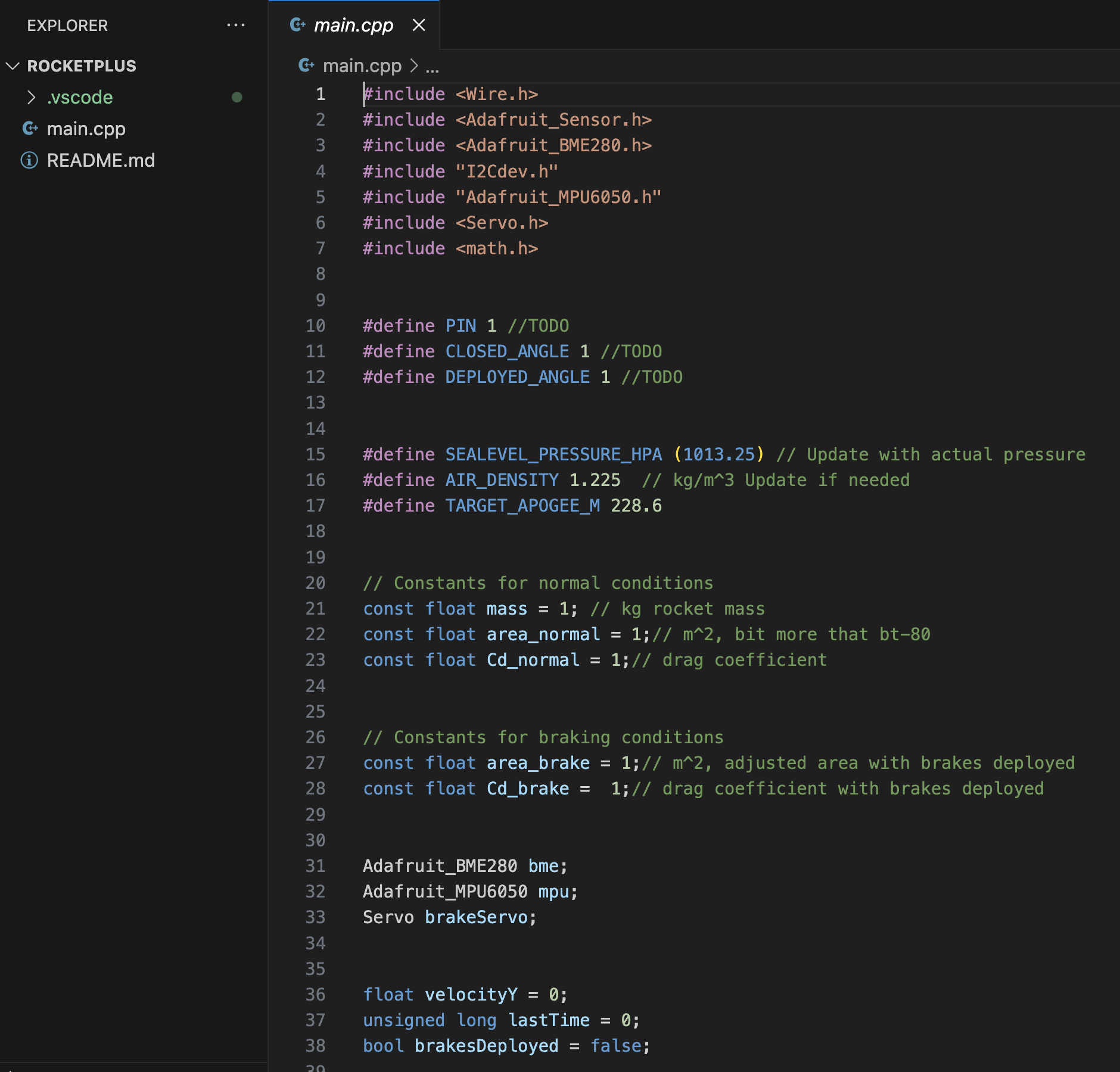
Rocket++

An in-house flight computer with state-machine-based flight detection, dual-deploy ejection, telemetry logging to onboard flash, and a custom KiCad PCB.

Form factor54mm sled
MCURP2040
IMUBMI088
CircuitSpace electronics learning project
Software · Open source

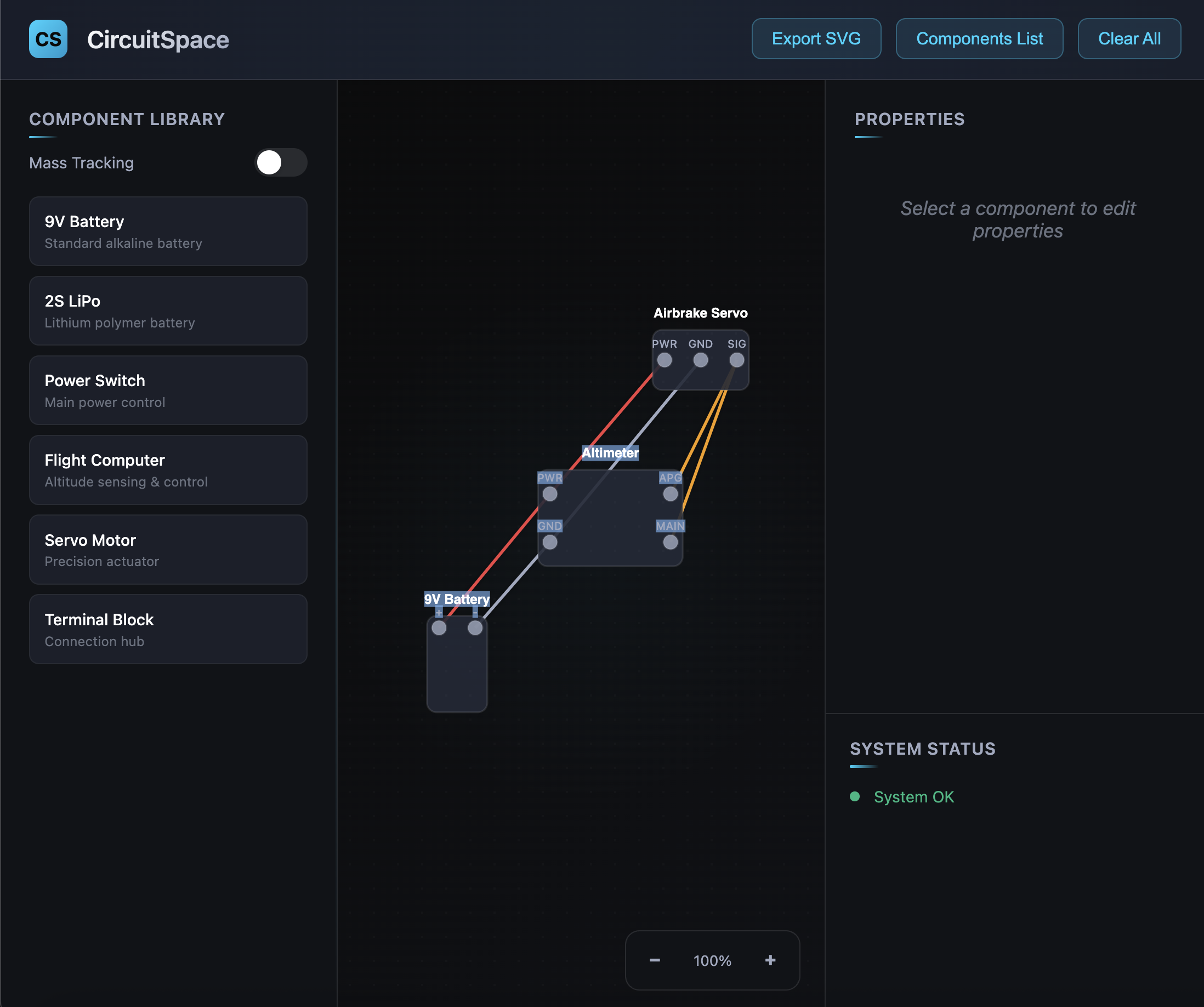
CircuitSpace

A web-based circuit simulator built from scratch in JavaScript, helping members learn schematic design and simulate basic circuits without paid tools or local installs.

StackVanilla JavaScript
StatusLive
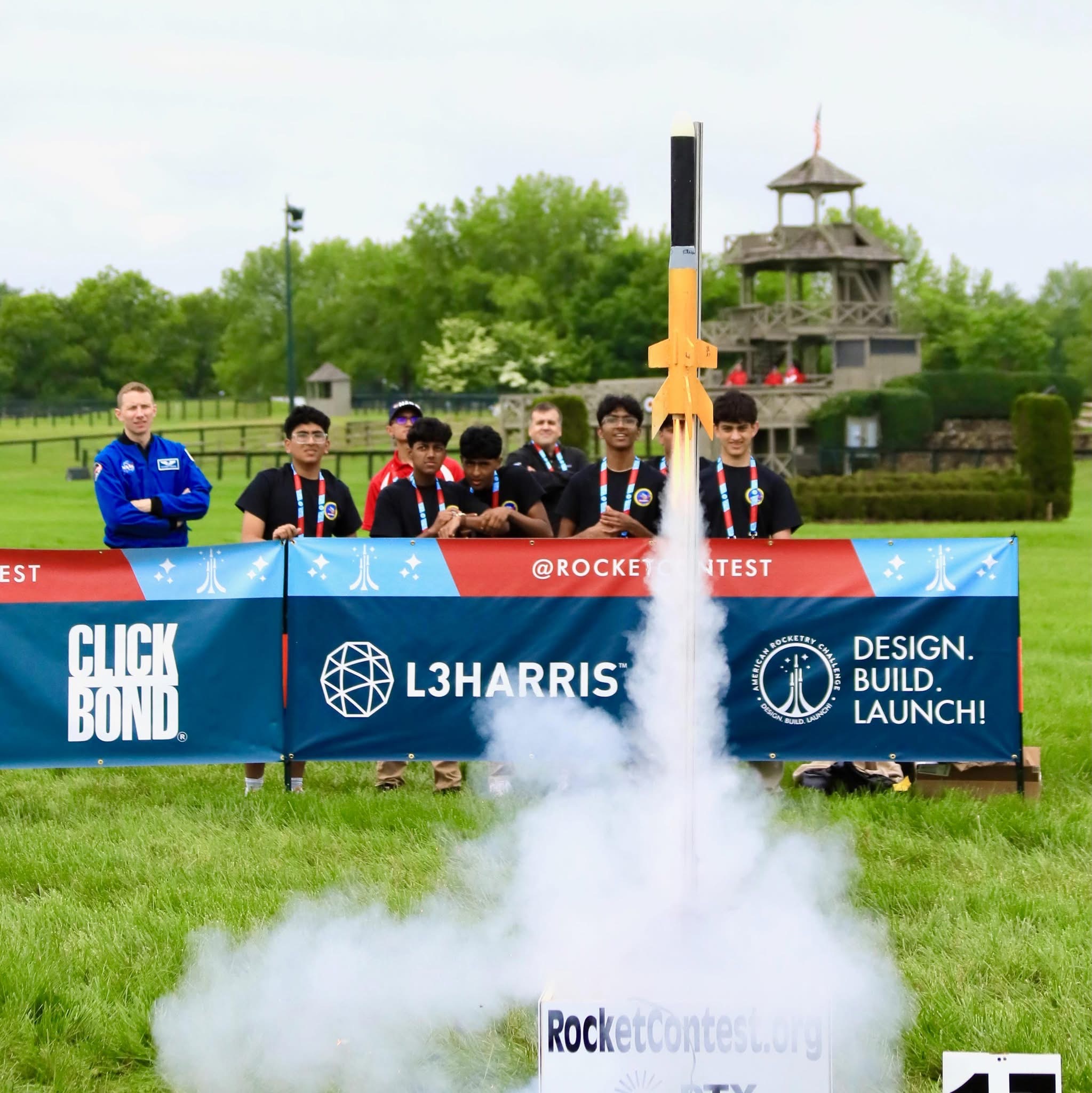
South Brunswick Aerospace ARC 2025 competition rocket
Rocketry · 2025

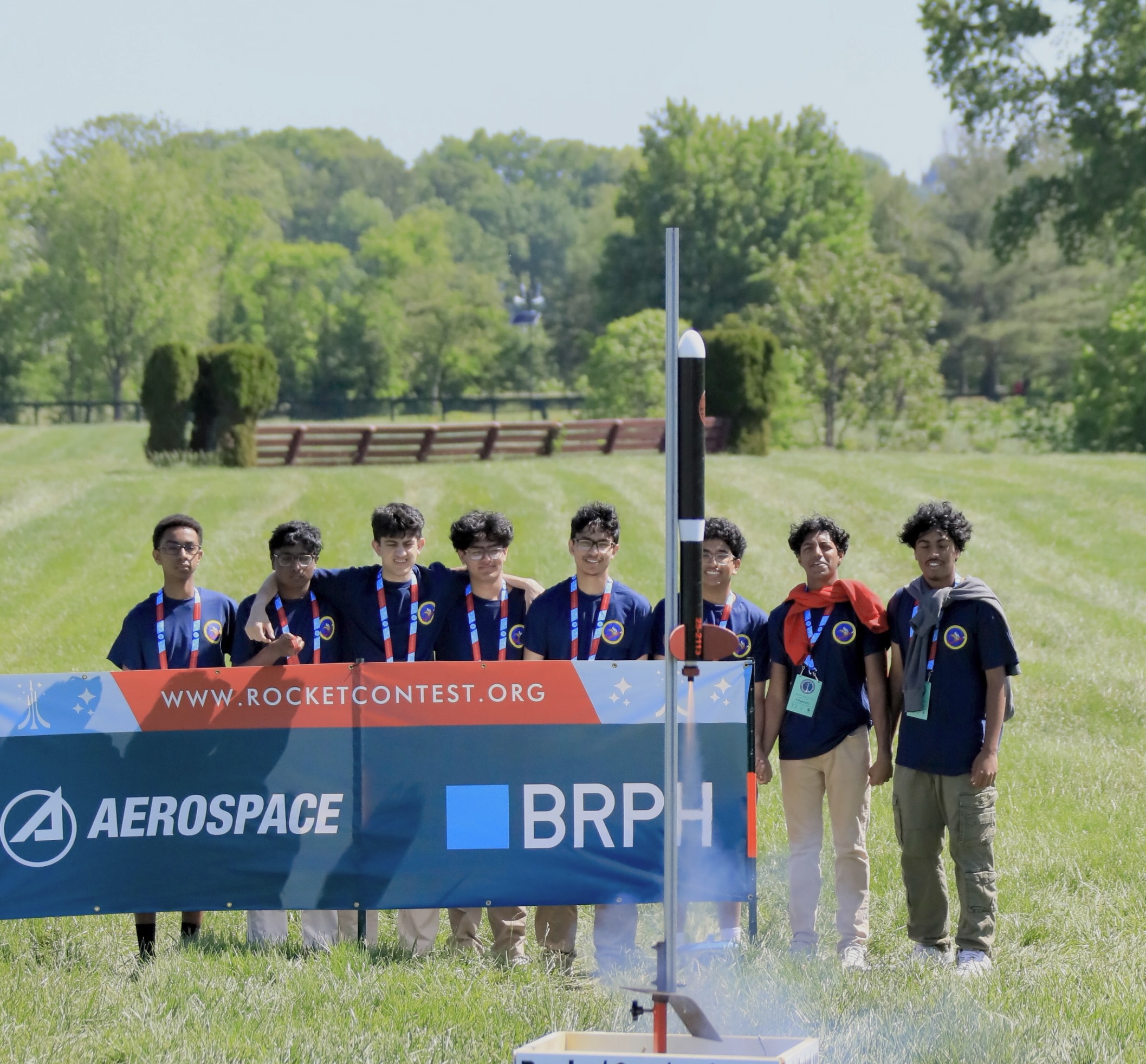
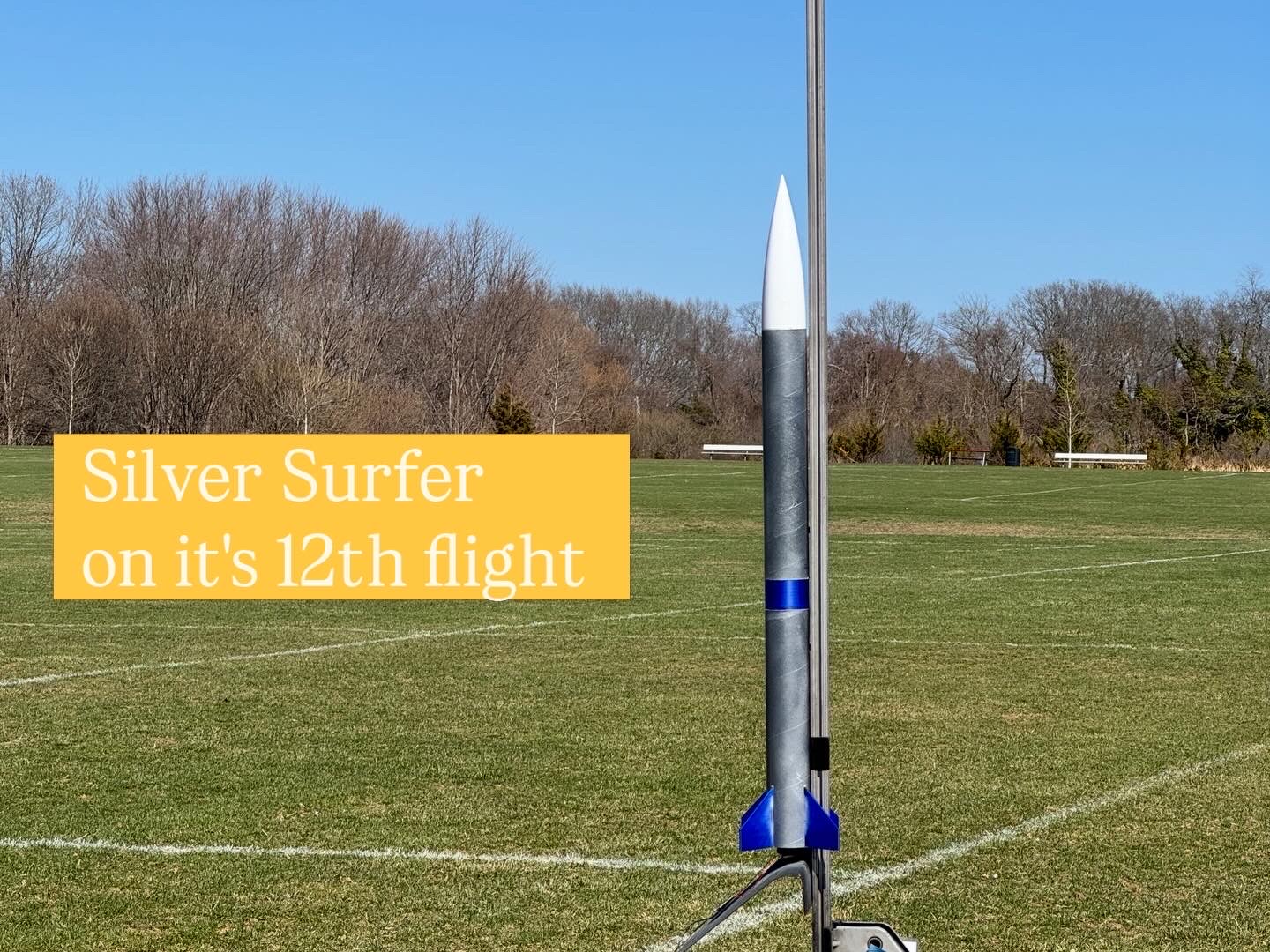
ARC 2025 rocket

The team’s American Rocketry Challenge build uses a G12 fiberglass airframe and Rocket++ avionics. OpenRocket simulations help model stability, explore wind conditions, and tune the flight profile.

AirframeG12 fiberglass
Target altitude800 ft
PayloadRaw egg
South Brunswick Aerospace ARC 2026 competition rocket
Rocketry · 2026

ARC 2026 rocket

The team’s G12 fiberglass competition rocket uses Rocket++ avionics. OpenRocket simulations help model stability and explore wind conditions while tuning the flight profile.

AirframeG12 fiberglass
Target altitude750 ft
PayloadRaw egg
CFD simulation of airbrake deployment
Aerodynamics · Analysis

Airbrake CFD analysis

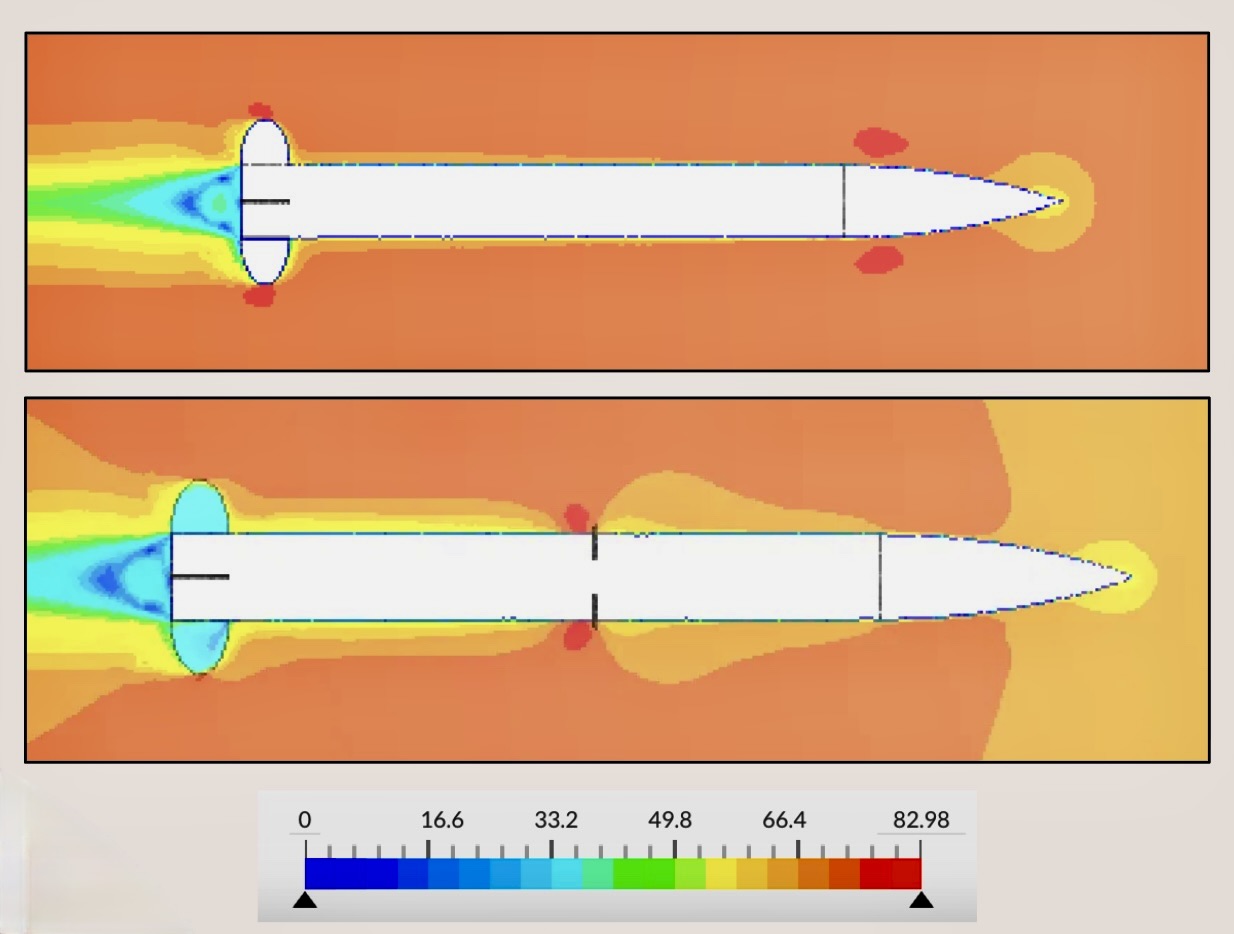
OpenFOAM computational fluid dynamics study of airbrake geometry at transonic speeds. The team characterized drag at different deployment angles and compared results with RASAero simulations.

ToolOpenFOAM
Mach0.3–0.7
Aerospace telemetry data visualization
Avionics · Analysis

Flight-data post-processing

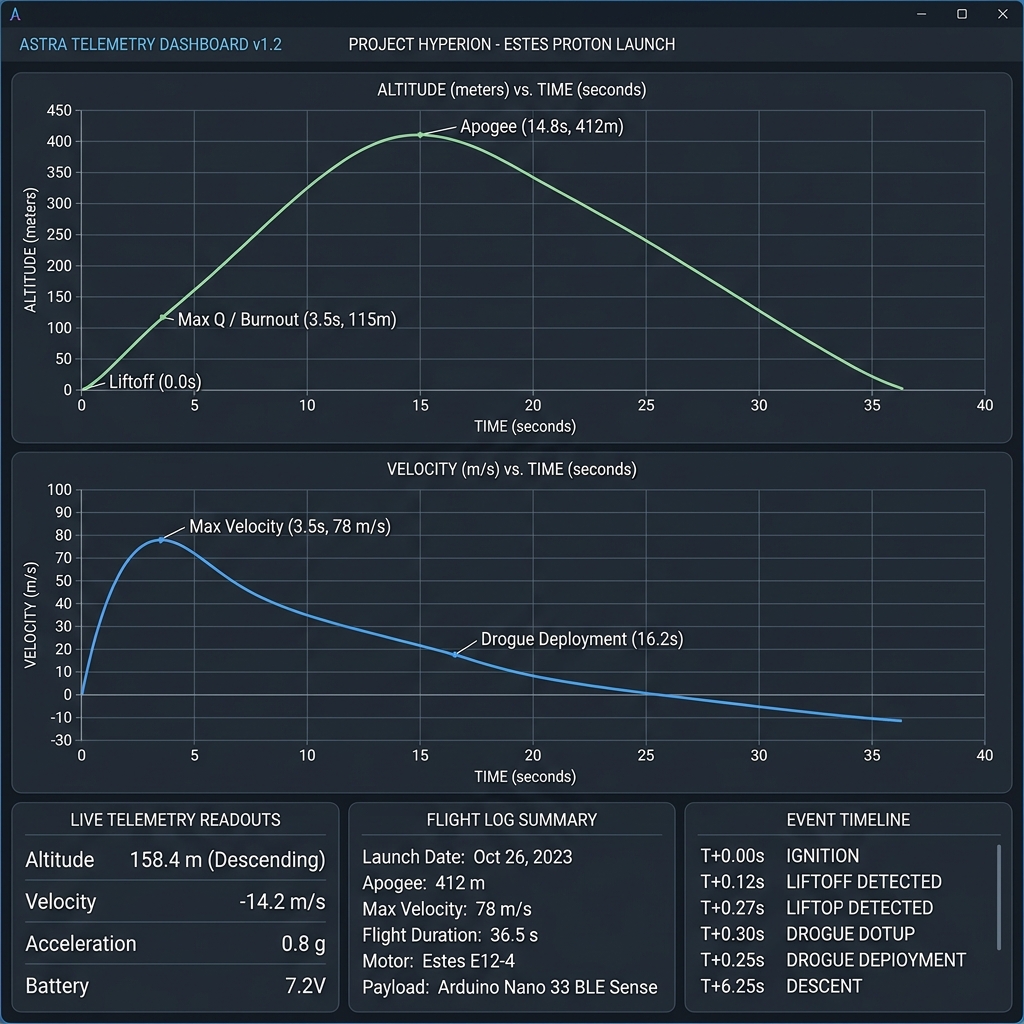
A Python pipeline for cleaning and visualizing Rocket++ flight logs. It reconstructs flight profiles, checks sensor agreement, and exports data for simulation comparison.

LanguagePython
LibrariesPandas, Plotly
Finite element analysis of a rocket fin
Mechanical · Structural

Rocket fin FEA

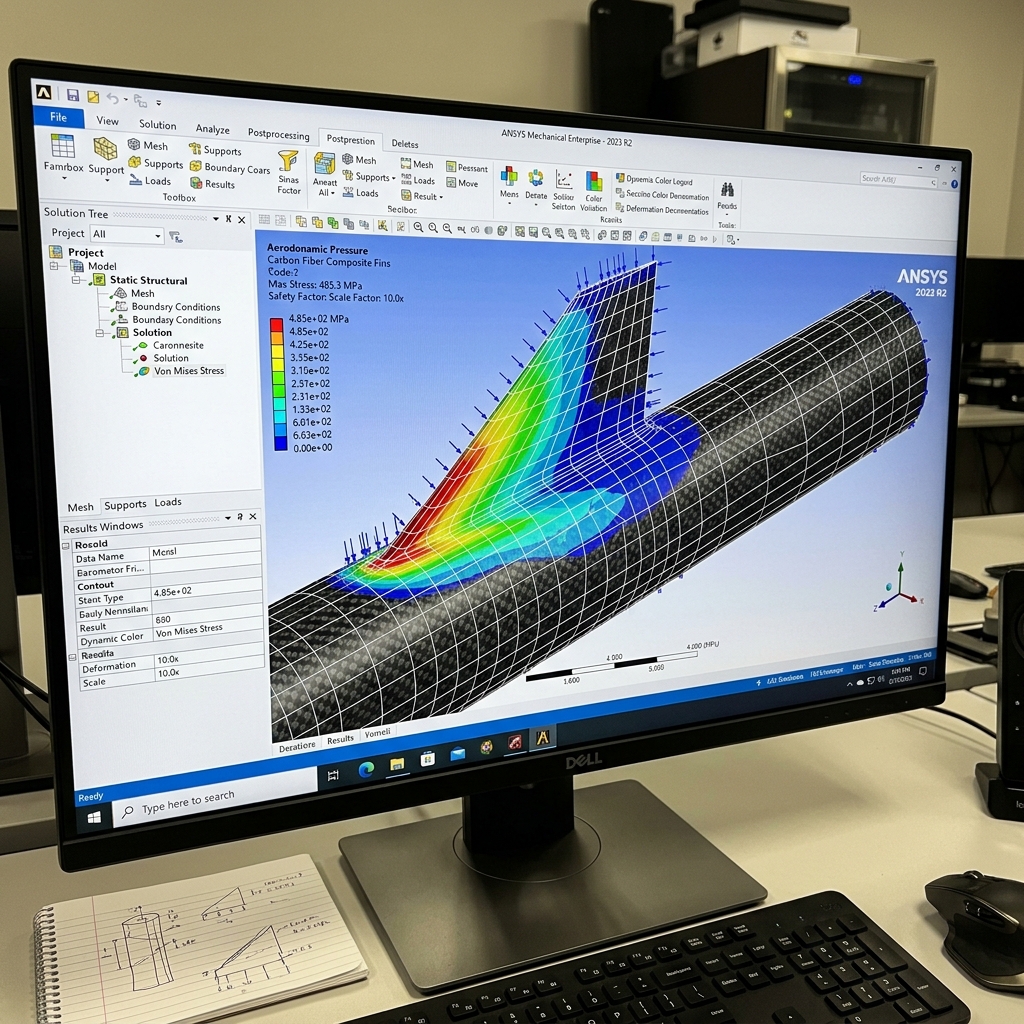
Finite element analysis of trapezoidal fins under simulated max-Q aerodynamic loading, comparing G10 fiberglass and carbon-fiber layups to evaluate stiffness and weight.

ToolFusion 360 FEA
MaterialsG10, CFRP
Research paper on CanyonBench-Trace
Machine learning · Research

CanyonBench-Trace

A machine-learning study based on the limited footage recovered from the NASA TechRise flight. The team submitted its paper to NeurIPS.

NASA TechRise · 2026

NDVI Mapping via Machine Learning

With NASA/Futureengineers mentorship, Team A designed an experiment to test whether machine learning could estimate the Normalized Difference Vegetation Index (NDVI) from a suborbital balloon flight. The payload gathered location, altitude, orientation, 11-band spectral measurements, ground imagery, and air pressure. The team planned to pair ground images with Sentinel-2 NDVI data, then compare model architectures, sensor combinations, and loss functions to explore balloon-based vegetation mapping as a lower-cost crop-health monitoring approach.

The payload flew on a high-altitude World View balloon from Paige, Arizona. Its flightbox shattered on descent, and only one SD card was recovered. Zafir Shamsi used the available data to teach team members machine learning, and the team later submitted a research paper to NeurIPS. See related work on the Research tab.

Normalized Difference Vegetation Index

NDVI = (NIR − Red) / (NIR + Red)

Healthy leaves strongly reflect near-infrared light, while chlorophyll absorbs red light. Comparing those reflectance values helps describe vegetation.

Payload hardware

Sensor suite

The flightbox integrated an AS7343 multispectral sensor, a TSL2591 light sensor, a BME280 environmental sensor, and an MPU6050 IMU alongside World View GPS telemetry, a photodiode, and a development board.

Data systems

Telemetry, logging & status

Every second, the Python logger writes 39 comma-separated fields—including World View flight telemetry and sensor readings—to an onboard SD card.

Sensors initialize independently; unavailable sensors are recorded as “N/A” while readings from the others continue. A NeoPixel displays flight phase—yellow for initializing, green for launching, cyan for floating, blue for terminating, and gray for unknown—while the GO LED indicates payload readiness and telemetry streaming.

Payload code on GitHub
Experiment objective slide with an illustration relating NDVI values to plant health
Research objective: estimate vegetation health from balloon-collected data.
Workflow diagram showing sensor data and Sentinel-2 NDVI feeding a machine-learning model
Experiment workflow: synchronize sensor readings, pair images with Sentinel-2 data, and compare models.
Prototype slide with a flightbox circuit diagram and assembled sensor electronics
Prototyping: plan the circuit and component layout, then assemble the flightbox electronics.
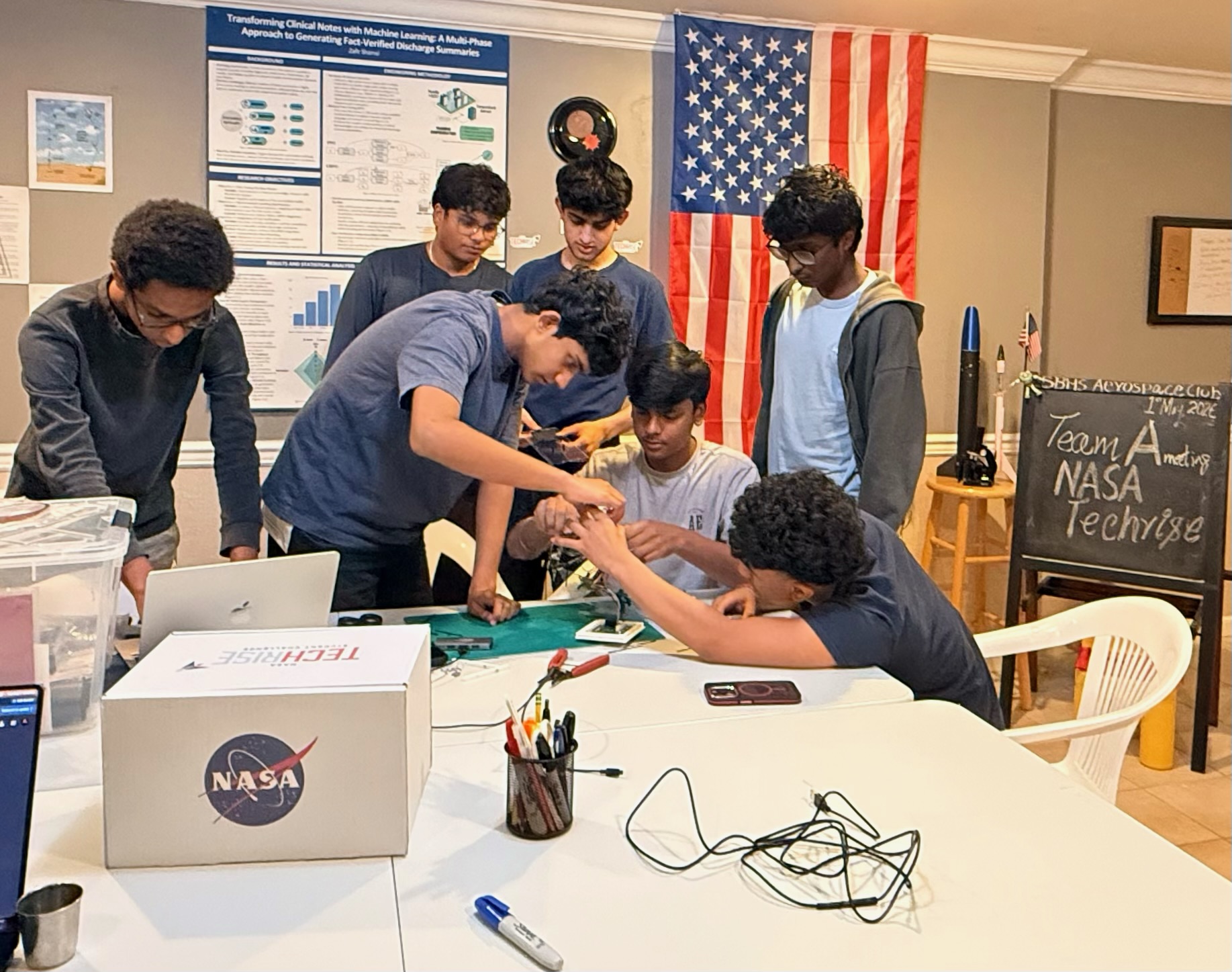
Students practicing soldering with mentor guidance
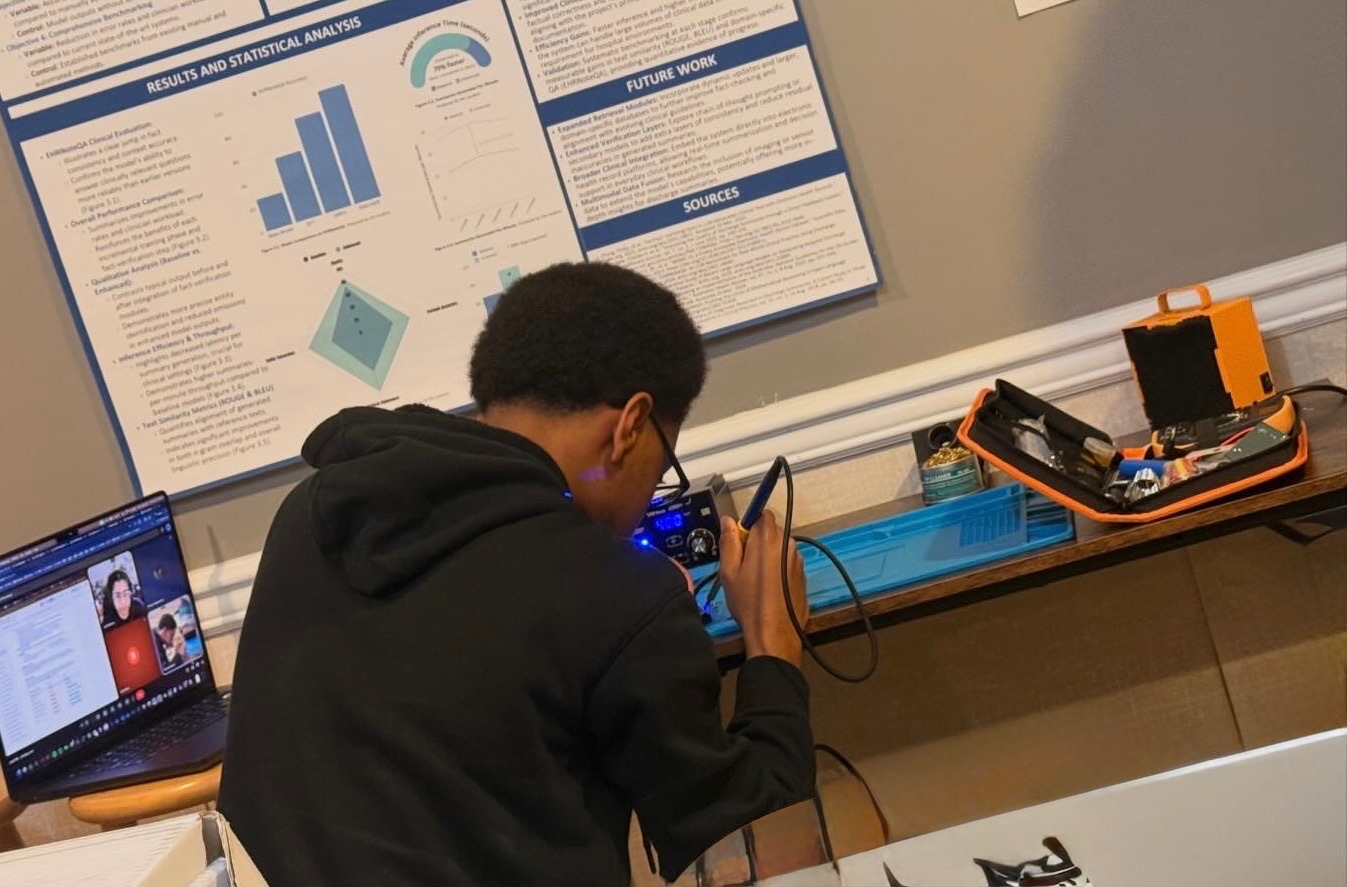
Soldering test under the guidance of a NASA mentor
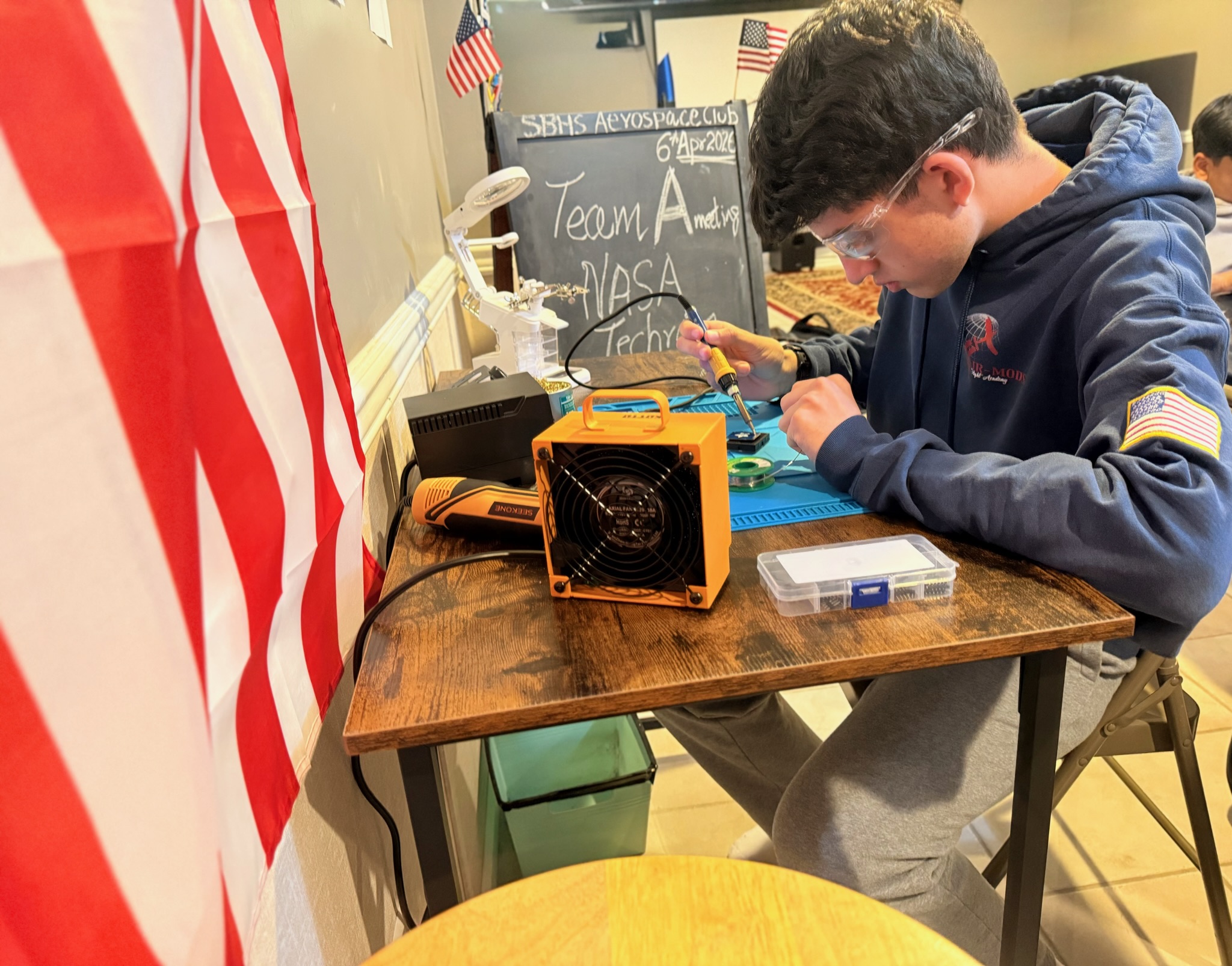
A team member soldering an electronics component
Assembling the sensor electronics
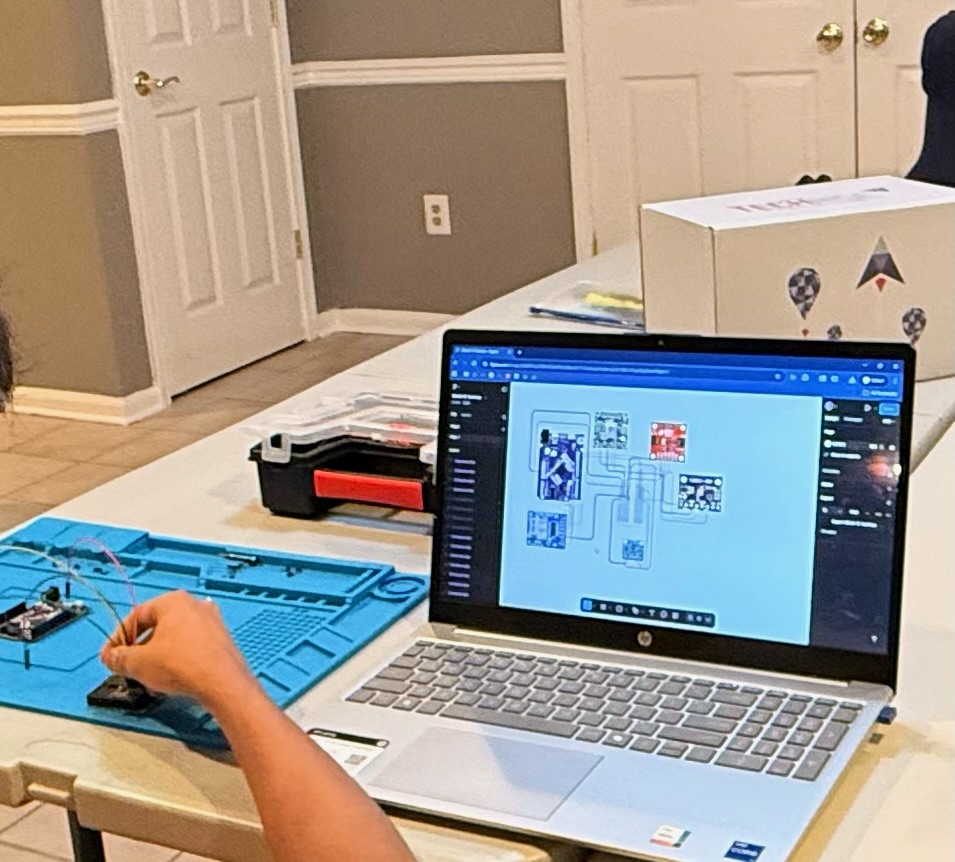
Circuit diagram for the experiment
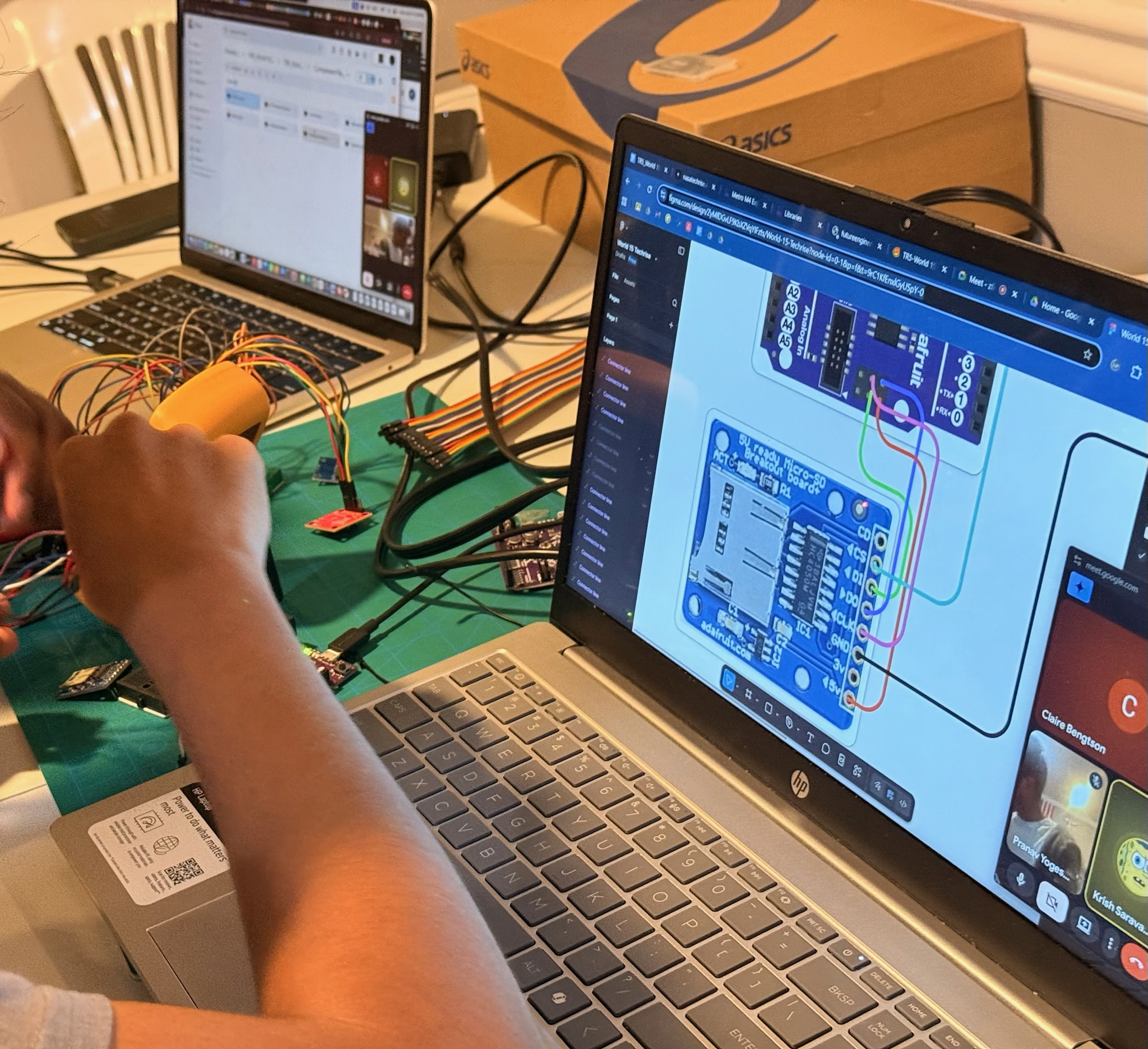
Planning the circuit
The completed circuit schematic
Refining the circuit design
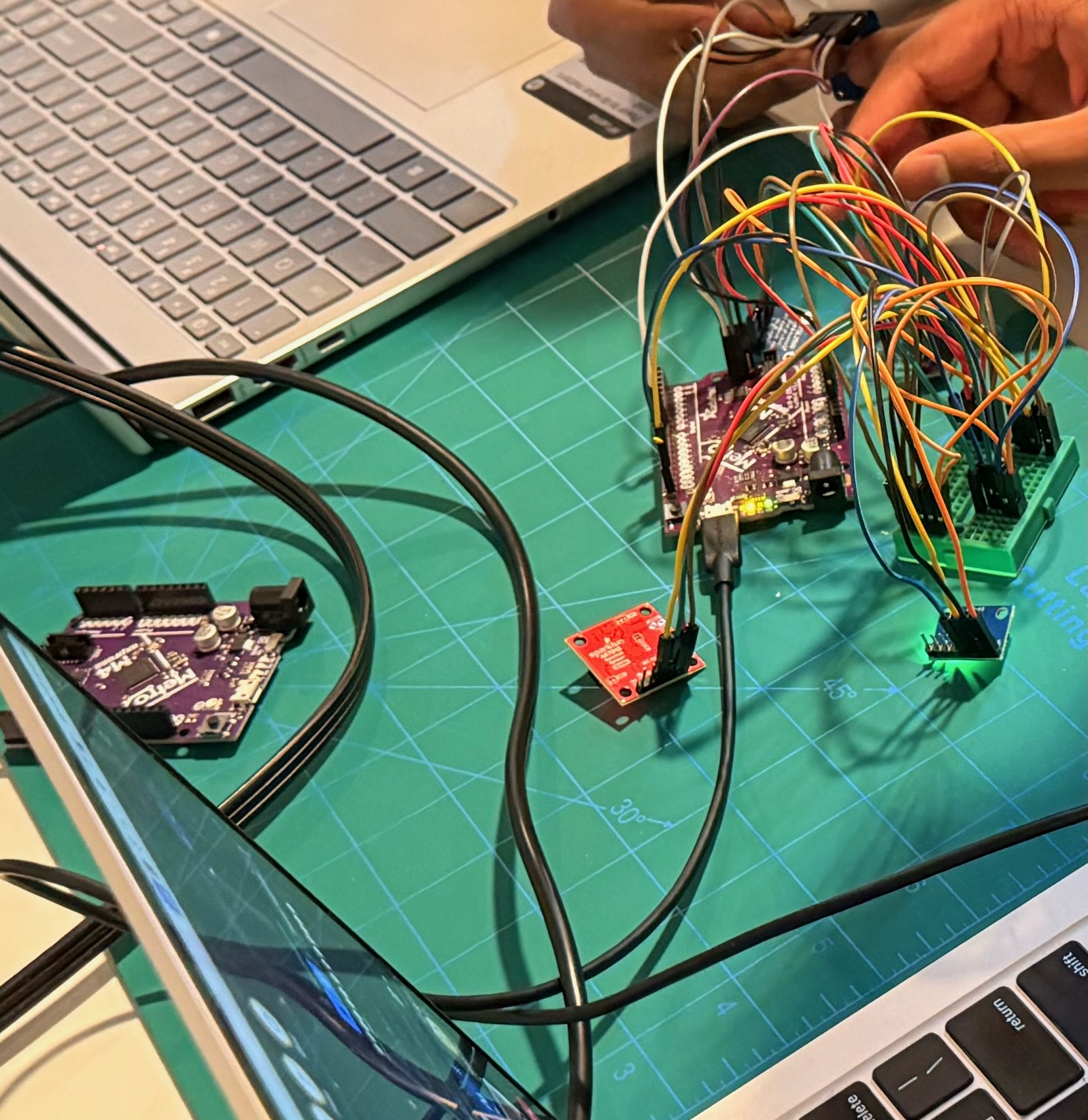
NASA TechRise sensor circuit
Testing the sensor circuit
Components installed in the flightbox
Integrating the flightbox components
Completed NASA TechRise payload flightbox
Shipping the payload for flight
ARC 2026 rocket prepared for competition
American Rocketry Challenge · 2026

American Rocketry Challenge 2026

The team designed and prepared a rocket for the 2026 challenge, which asks teams to meet a target altitude and flight duration while safely carrying an egg payload.

Target altitude750 ft
Flight duration36–39 sec
NASA TechRise payload flightbox
NASA TechRise · 2026

NASA TechRise Challenge

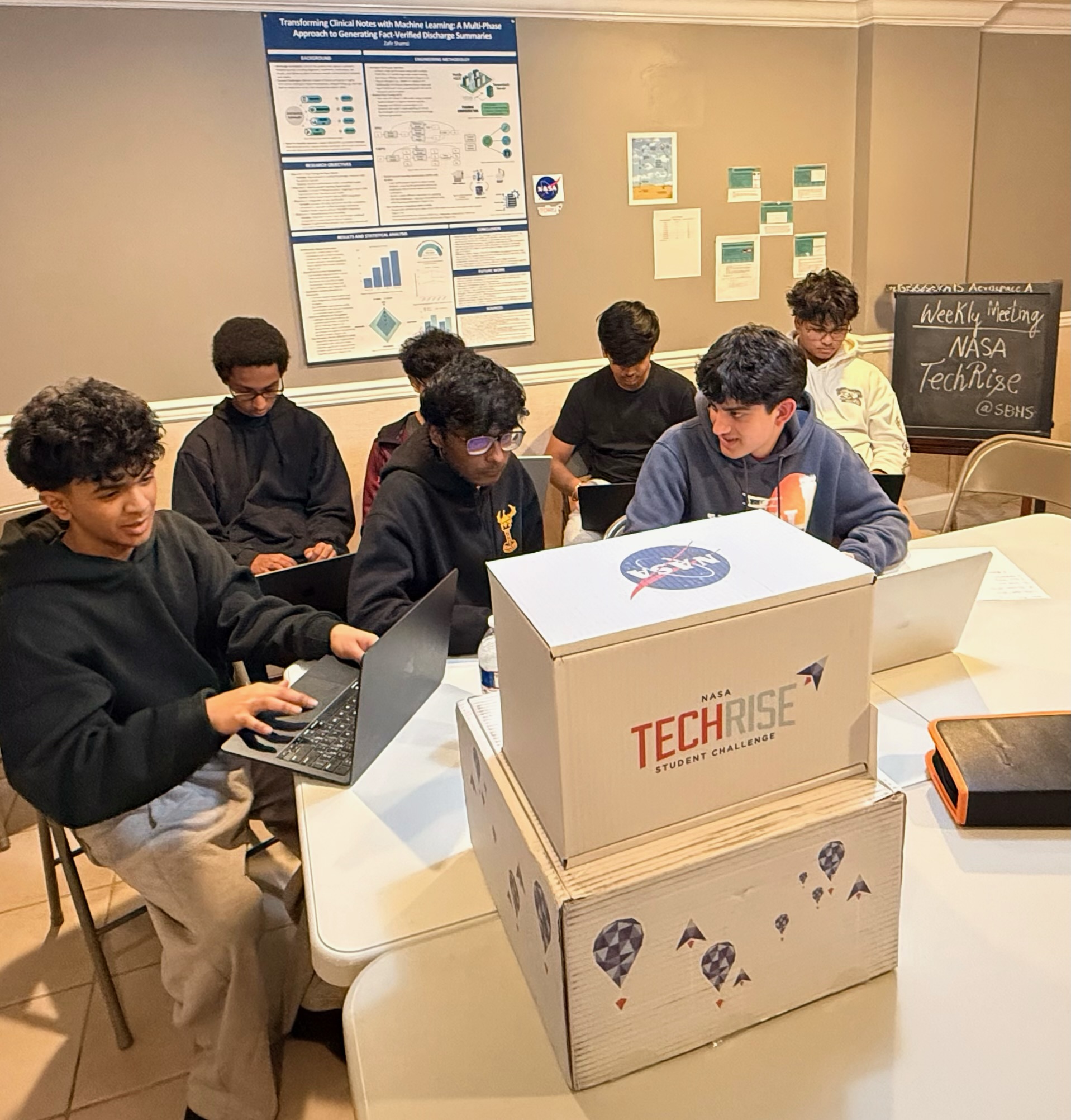
The team developed a student-designed experiment and flightbox for a NASA TechRise flight, combining sensor integration, data collection, and vegetation analysis.

FocusMultispectral sensing
PayloadExperimental flightbox
ARC 2025 competition rocket
American Rocketry Challenge · 2025

American Rocketry Challenge 2025

The team built and flew a competition rocket designed around an 800-foot target altitude, a 40–45-second flight window, and an egg payload.

Target altitude800 ft
Flight duration40–45 sec
South Brunswick Aerospace competition rocket
American Rocketry Challenge · 2024

American Rocketry Challenge 2024

The team’s first American Rocketry Challenge season, bringing together rocket design, building, and flight experience.